About this trip
Travel into the remote mountains of Western Mongolia in search of the snow leopard, one of the world's most elusive big cats. This eight-day photography expedition takes us to the Jargalant Khairkhan Mountains in Altai Mountain Range, an important habitat for snow leopards and other mountain wildlife.
Accompanied by experienced local wildlife trackers, we spend four full days searching for snow leopards, examining tracks and territorial markings, and scanning rocky ridges and remote valleys with binoculars and spotting scopes.
Our expeditions operate from December to early March. Each month offers different winter conditions and wildlife behavior. January to early March overlaps with the snow leopard mating season, when increased movement, scent marking and vocal activity may create additional opportunities for observation.
Along the way, we may encounter Siberian ibex, argali sheep, birds of prey and other wildlife. The snow-covered mountains also provide excellent opportunities for winter landscape photography.
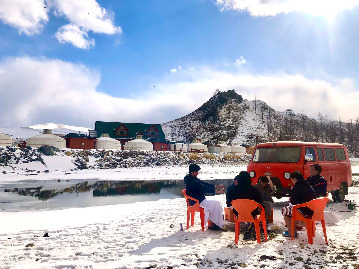
We stay in a traditional heated ger camp, supported by local trackers and an experienced expedition team. Daily activities are flexible and adapted to weather conditions, recent wildlife movements and information from our local guides.
Seasonal Snow Leopard Photography
Our expeditions operate on selected dates between December and early March. Each month offers different snow conditions, wildlife behavior and photography opportunities.
December — Early Winter Tracking
Snow leopards continue hunting and marking their territories. Snow-covered landscapes offer opportunities for tracking and winter wildlife photography. Daylight is shortest at this time of year.
January — Beginning of the Mating Season
The breeding season begins, and territorial activity and movements may increase. January is typically one of the coldest months, requiring careful preparation for extended observation.
February — Mating Season
February falls within the snow leopard breeding season. Pairs may occasionally travel together, while scent marking and vocal communication become important aspects of their behavior.